Hot-pour crack sealing before monsoon rain finds every opening in your driveway and takes the base out from under it.
Crack repair fills and seals cracks in an otherwise sound asphalt driveway before they widen, multiply, or let water into the base underneath. Most residential crack repair uses a hot-pour rubberized sealant that flexes with the asphalt as it expands and contracts, rather than a cold-pour filler that hardens and re-cracks at the same spot within a season.
In Summerlin, timing is half the job. Monsoon season runs mid-June through September, and a single storm can drop close to two inches of rain in under an hour on ground that doesn't drain it fast. Water takes the path an open crack gives it, straight down into the base instead of off the surface. A crack that looked cosmetic in June is often the reason a driveway needs a patch repair by September.
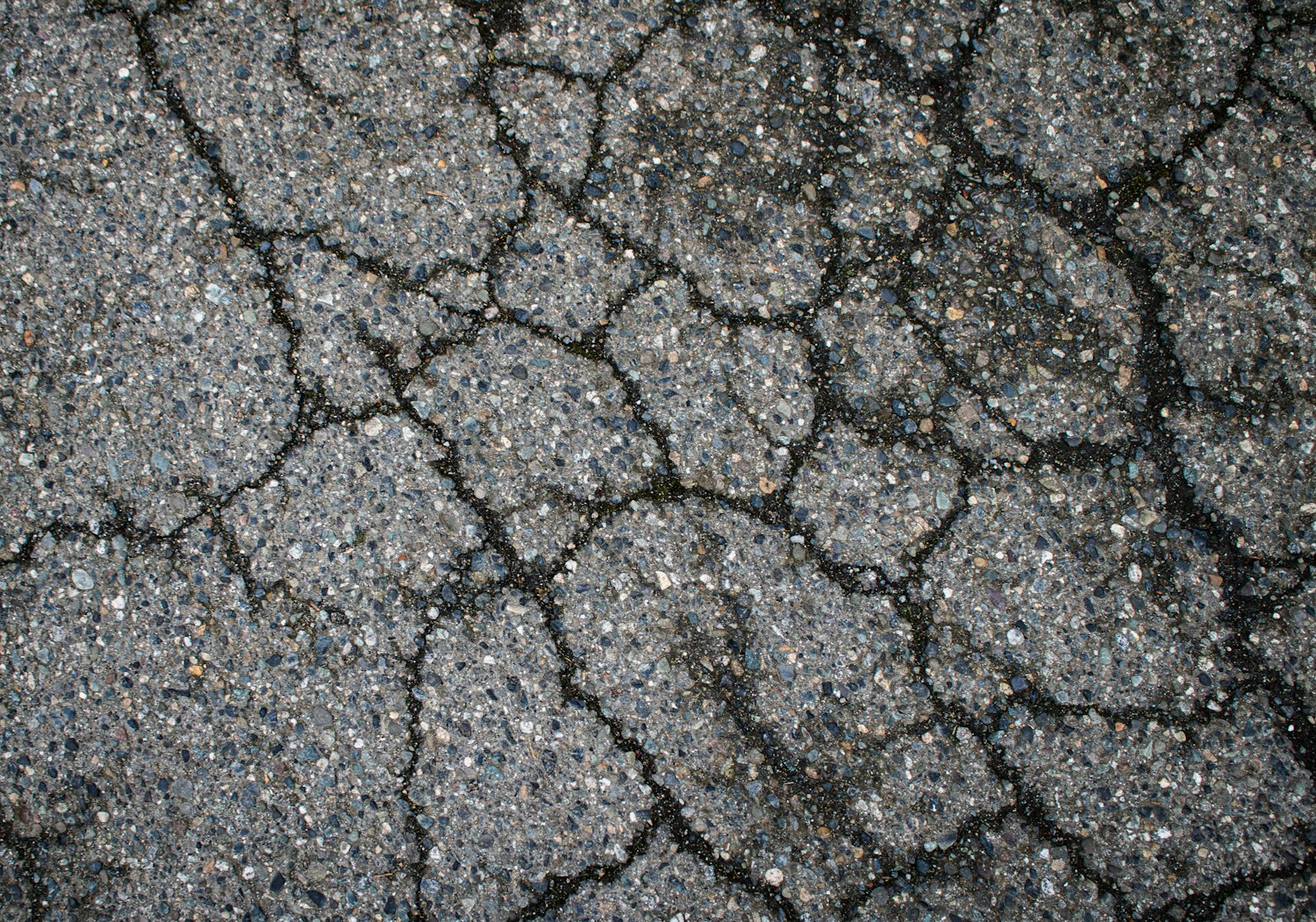
We inspect every crack, note which are stable surface cracks versus signs of a deeper base problem, and quote accordingly.
Linear footage of cracking and a flat price in writing, plus a straight answer if a crack signals something beyond crack repair.
Cracks are cleaned of debris and vegetation, and wider cracks are routed to a consistent width so the sealant bonds properly instead of sitting loose on top.
A rubberized hot-pour sealant is applied flush with the surface, built to flex with the asphalt through Nevada's wide seasonal temperature swings.
A walkthrough on cure time before foot or vehicle traffic crosses the repaired area.
Crack repair typically runs $3-6 per linear foot for hot-pour sealing on a residential driveway, with most jobs carrying a minimum service fee to cover mobilization for a small repair.
Get my flat written quoteSouthern Nevada's monsoon storms can drop 0.5 to 2 inches of rain in under an hour, and desert soil doesn't absorb that kind of volume quickly. An open crack gives that runoff a direct path into your driveway's base, and a base that gets saturated during a storm is what turns a small crack into a pothole. Sealing before the season's heaviest storms, typically mid-July through late August, is the highest-value timing for this work.
Hot-pour rubberized sealant is melted and applied hot, then cures into a flexible seal that moves with the asphalt through temperature swings. Cold-pour filler is easier to apply but hardens rigid and commonly re-cracks at the same spot within a season, especially somewhere like Las Vegas with a wide gap between summer and winter pavement temperatures. We use hot-pour on every job.
In most cases, yes, that's the point of crack repair as a category. If we find cracking that indicates a deeper base failure, like alligatoring over a wide area, we'll tell you directly rather than seal over a problem that will just come back.
A properly cleaned, routed, and hot-pour sealed crack typically holds for several years, though individual results depend on traffic and how much the surrounding asphalt continues to move. We recommend a visual check each spring before monsoon season.
Crack seal first. Sealcoating over open cracks just hides them temporarily without addressing the opening underneath, so we always recommend crack repair before a full seal coat application.
Same business day, Mon-Fri.